Two Ponds Farm
  • Home
  • About
  • Blog
  • Contact
  • Privacy Policy
  • Garden Pictures
  • Chicken and Duck Pictures
  • Native Plant Pictures
  • Game Camera Pictures

4/23/2024

Rudbeckia Species: Black-Eyed Susans and More

0 Comments

Read Now
 

Rudbeckia Species: Black-Eyed Susans and More
​

Picture
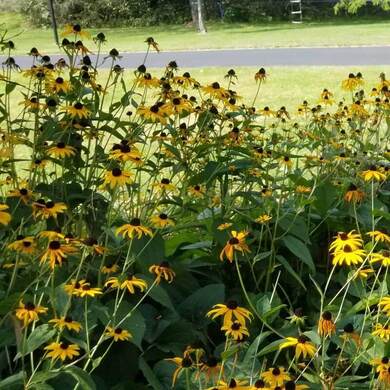
Black-eyed Susans in one of my front flower beds, planted by the previous owner.
​Rudbeckia is a genus of plants in the Asteraceae family. All Rudbeckia species are native to at least some parts of North America. These flowers are commonly known as coneflowers or black-eyed Susans due to the raised disc in the center of the flower, which is usually black or brown. The most well-known species is probably the black-eyed Susan with its distinctive yellow flowers and black central disc. The black-eyed Susan is a beautiful, easy-to-grow flower that tends to flower for a long time, making it a popular plant for homeowners. Most Rudbeckia species are host plants for the caterpillar form of the Silvery Checkerspot butterfly (Chlosyne nycteis) and the Wavy-Lined Emerald moth (Synchlora aerata). In addition, these flowers attract many other pollinators, including bees, butterflies, and skippers (a type of butterfly). I will cover some of the more common Rudbeckia species native to the Midwest (and sometimes beyond) below and encourage anyone with the space to plant one or more of these beautiful flowers.

Black-Eyed Susan

​As mentioned above, the black-eyed Susan (Rudbeckia hirta) is probably one of the most popular Rudbeckia species as it is easy to grow, has pretty yellow daisy-like flowers, and has a long flowering season. It is a biennial (it takes two years to complete its lifecycle), but generally re-seeds itself, keeping a consistent plot of flowers in your garden. If grown from seed, it will bloom in its second year, but transplants typically bloom the year they are planted. It grows in full to partial sun and can tolerate medium-wet to dry soils. Black-eyed Susans generally grow about 2 feet tall. I have this growing on my property; it is deer-resistant!
Picture
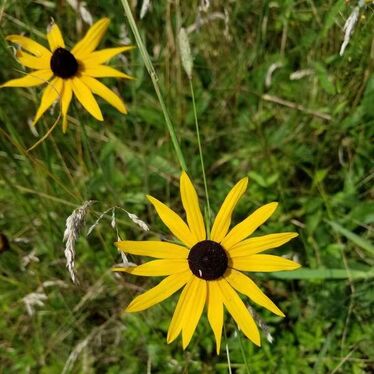
Black-eyed Susans growing wild on my property.

Brown-Eyed Susan

​Brown-eyed Susan (Rudbeckia triloba) grows much taller than most other Rudbeckia species, up to 5 feet tall. Other common names include three-lobed coneflower, branched coneflower, and thin-leaved coneflower. It is native to much of the east coast of the United States, extending as far west as Minnesota and Texas. The brown-eyed Susan likes full to partial sun with medium-wet to medium-dry soils. It is a short-lived perennial or sometimes a biennial, but it self-seeds very easily and is not recommended in areas where you wish to keep it under control. Without competition, it will grow more bushy, but with more competition, it will grow taller. Brown-eyed Susan will not flower until the second year, and it also works well as a cut flower.

Orange Coneflower

​Orange coneflower (Rudbeckia fulgida) is native to the eastern part of the United States, as far west as Wisconsin and Texas. Showy Black-eyed Susan (Rudbeckia speciosa variant sullivantii or Rudbeckia fulgidia subspecies sullivantii), also called Sullivant’s Coneflower, is considered a subspecies of the orange coneflower. Orange coneflowers have a long flowering season and bloom from mid-summer until fall. It is a short-lived perennial, hardy in zones 4-8, but self-seeds for renewal. The petals are more orange-yellow, hence the name, and flowering can be extended by deadheading old flowers. This flower grows 2-4 feet high. Depending on the source, deer may or may not bother the orange coneflower. If anyone has this flower, please let me know! Orange coneflowers prefer full to partial sun and medium-wet to medium-dry soils.

Sweet Black-Eyed Susan

​Sweet black-eyed Susan (Rudbeckia subtomentosa) is native to the northern Midwest in states along the Mississippi River extending south to Louisiana. Unlike most other Rudbeckia species, it is a perennial. Sweet black-eyed Susan prefers full to partial sun and medium-wet to medium-dry soils where it can reach heights up to 5 feet. Sweet black-eyed Susan gets its name from its sweet fragrance, which comes from the leaves, not the flowers; however, the flowers are larger than other Rudbeckias and are also long-lived, lasting from late summer into fall. It attracts many pollinators, including bees and butterflies, as well as beetles.

Wild Golden Glow

​Wild golden glow (Rudbeckia laciniata) is a very tall Rudbeckia species, reaching up to 7 feet high. It has several other common names, including cut-leaved or cut-leaf coneflower, tall coneflower, green-headed coneflower, or its Cherokee name of Sochan. Wild golden glow is native to much of the United States, from the East Coast to Idaho, Utah, and Arizona. It prefers moist soil and can tolerate full sun to full shade. If in full sun, wild golden glow prefers soil to remain more on the moist side. It spreads via rhizomes, so it may not be the best choice if you have small flower beds, as it tends to spread aggressively.
Picture
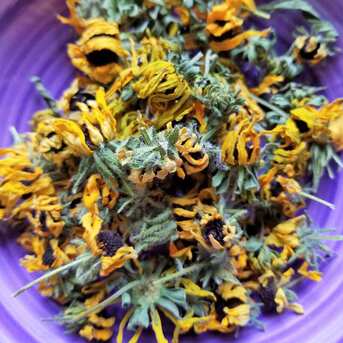
Black-eyed Susans not only make a great cut flower but they also dry beautifully.

References

  1. BONAP’s North American Plant Atlas. https://bonap.net/Napa/TaxonMaps/Genus/State/Rudbeckia
  2. Prairie Moon Nursery. https://www.prairiemoon.com/search-results.html?Search=rudbeckia#/?resultsPerPage=24
  3. Prairie Nursery. https://www.prairienursery.com/catalogsearch/result/?q=rudbeckia
  4. Butterflies and Moths of North America: collecting and sharing data about Lepidoptera. https://www.butterfliesandmoths.org/

Share

0 Comments

4/17/2024

Herb Gardening

0 Comments

Read Now
 

Herb Gardening

Picture
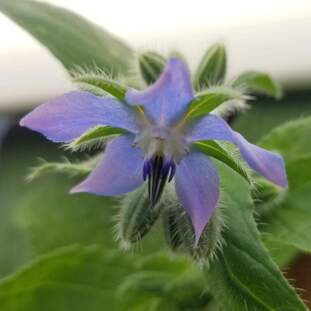
A borage flower.

What is an Herb?

​Herb is short for herbaceous, which botanically means a plant that grows without a woody stem and dies back to the ground each winter. However, some plants commonly considered herbs, such as rosemary, sage, and lavender, develop a woody stem and do not die back. Other definitions of herbs are flowering/seed-bearing plants used for their leafy green parts, though there are exceptions. Spices, in contrast, are usually seeds, bark, roots, or the fruit of plants, generally sold dried. Herbs are often used both fresh and dried. For this post, I will broadly define herbs as anything I grow for culinary purposes or tea.

Why Grow Herbs?

I grow herbs for a variety of reasons. First, I love gardening and try to grow as many different fruits, vegetables, and herbs as possible. Second, buying fresh or even dried herbs is expensive. If you use a lot of herbs, the cost can add up, and growing your own can save you money. Lastly, I grow herbs because I love to cook, so this post will focus on herbs used for culinary purposes and tea. Many herbs are also grown for medicinal purposes; however, I am not a medical doctor, so I will not delve into herbs grown specifically for medicine.

Culinary Uses

Using fresh herbs in your cooking can help reduce the amount of sugar, salt, and fat in your food because you get an extra burst of flavor from the herbs. As mentioned above, growing herbs can save you money, especially if you dry excess herbs for later use. I also like making herb mixes for cooking, such as Italian seasoning or tea blends. I will explain below how I use herbs for cooking and brewing tea.

Container versus In-Ground

Two criteria determine whether I grow an herb in the ground or in a container. If an herb, such as rosemary, will not survive my cold winters in zone 4b, I grow it in a pot to bring it in for the winter. Other herbs, such as mint, tend to grow aggressively, so I also grow these in pots, bring them in for the winter, and cut the flowers off before they go to seed to prevent spread. Other herbs that do not spread excessively and can overwinter in my zone, such as thyme, parsley, tarragon, sage, and chives, I plant in my garden. Again, unless I want them to self-seed, I cut off the flower heads before they go to seed to keep them from spreading. I also grow herbs in my Aerogarden or pots for fresh herbs throughout the winter.

Location

I like to grow my herbs close to my kitchen, so it is easy to pop outside when needed. I do not have a dedicated herb bed, so I intersperse them in my front flower bed. Because I also live where it gets freezing in the winter, I plant my herbs on the south side of my house (which happens to be the front) to increase the chances that the herbs overwinter well. Some herbs, like lavender, are hit or miss for overwintering in my zone, but I have had success with “Munstead” lavender on the south side of my house. Other lavender varieties have failed to overwinter.

Start from Seed or Buy Transplants?

Whether you buy herbs to transplant at a greenhouse or hardware store, or start your own, depends on whether you are ready to start seeds. If you do not want the hassle of starting your seeds, there is nothing wrong with buying the plants. You will likely have a smaller selection of herbs and varieties, but it is faster and easier. If you want to try starting seeds but are new to the process, I recommend reading my blog post on starting seeds. Some herbs can be more difficult to start from seed. Lavender, for example, needs light to germinate, so you want to gently press them into your seed starting mix and put a light over them immediately. Other seeds like parsley can take a long time (up to a month) to germinate. 

How to Take Care of Herb Plants

How to take care of herbs depends on where you live and whether your plants are in the ground or in pots. I live in central Wisconsin in zone 4b, which means that many herbs I either need to grow in pots, which I bring in for the winter, or grow outside as annuals. A few herbs I grow outside as perennials (tarragon, sage, and thyme) or allow them to self-seed (parsley) for renewal. Most herbs prefer full sun (6+ hours per day), but some exceptions are cilantro, which is prone to bolting in full sun or hot temperatures. Most herbs also prefer well-drained soil. If you have heavy, clay soil, you will likely need to amend it extensively to get herbs to grow well. Mixing compost or composted manure with peat or coconut coir and a little sand will help lighten the soil and improve drainage. Lavender, for example, particularly enjoys well-drained, dry soil. In general, herbs do not need a lot of fertilizer. A slow-release nitrogen-based fertilizer, such as blood meal, is useful for herbs you do not want to flower. For those herbs where the flower is harvested, for example, chamomile or borage, you may want a more balanced, all-purpose fertilizer.
​
Alternatively, if you grow your herbs in containers, you want to choose a potting soil that drains well. Do not use topsoil (unless you amend it extensively), as this compacts too much and will not drain well. I tend to use Pro-Mix (I recently switched to Sunshine Mix since my local store stopped carrying Pro-Mix) because it is light and drains well. However, it does not have many nutrients, so I often add compost or composted manure when potting. You also need to fertilize pots much more often than herbs in the soil, as the nutrients tend to drain away with watering or in the rain if they are outside.

The Herbs I Grow

Basil

Basil (Ocimum basilicum) comes in many different varieties. The classic variety is Genovese, which is easy to find in many stores and greenhouses. Less common but popular varieties include Sweet Thai, Spicy Saber, Cinnamon, Lemon, Lime, Blue Spice, Red Rubin, and Dark Opal. Red Rubin and Dark Opal are purple varieties of basil that I enjoy using fresh; however, I tried making pesto with them. I found that the color turns a brownish purple, which, although it still tastes delicious, is a little off-putting. I also enjoy growing Holy Basil (Tulsi) for tea instead of cooking, as its flavor differs significantly from traditional basil. I grew Blue Spice basil for the first time this year, and it looks and smells more like Holy Basil than traditional basil, so I will likely use that for tea as well. Most basil plants are not over 2 feet high and do well in the ground or pots. Basil tends to flower relatively quickly, which the bees love, but if you want to keep harvesting the leaves, be sure to pinch off any flowers that start developing.

Borage

​Borage (Borage officinalis)is an annual but self-seeds prolifically if you do not pinch off the flowers. Borage prefers full sun and is easy to grow. It can get tall, up to 3 feet, but tends to fall over, so plants may need to be supported by other nearby plants with a stronger growth habit. Most people eat the flowers, although other parts, such as the leaves, are also edible (they are hairy). The flowers often start pinkish but generally turn blue. Bees love borage, although it is not native to the United States, but rather from the Mediterranean. Borage has a light, cucumber-type flavor, and the flowers are often used as a garnish. My preferred use of the borage flowers is in various cocktails.

Catnip

​Catnip (Nepeta cataria) is a perennial herb hardy to zone 4 in the mint family that grows up to 3 feet tall. Catmints belong to the same genus (Nepeta) as catnip but are different species. I mostly grow catnip for my cats, due to the production of nepetalactone, which cats love, but some people also use it for tea. Although catnip is in the mint family, it does not spread as readily by roots, but will self-seed prolifically if you do not cut off the flowers, and may be invasive in some areas.
Picture
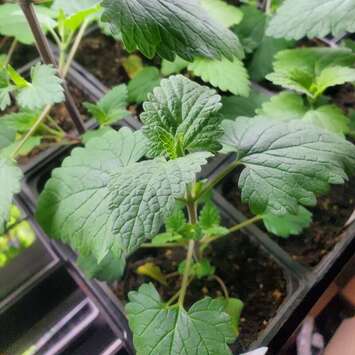
Catnip seedling.

Chamomile, German

There are two different species of plants commonly called chamomile. I have only grown German Chamomile (Matricaria chamomilla or M. recutita), so that will be my focus. The other chamomile is Roman Chamomile (Chamaemelum nobile), a low-growing, ground-cover type plant. German chamomile grows to about 2 feet high. It is an annual but can self-sow prolifically. The flowers are used to make tea, which supposedly has relaxing properties.

Chives

​Two different types of chives are commonly grown. Both common chives (Allium schoenoprasum) and garlic chives (Allium tuberosum) are cold-hardy perennials. Common chives grow round, hollow stems with purple flowers, while garlic chives grow flat stems with white flowers. Both have an onion-like flavor, but garlic chives have a more garlicky flavor. Chives will slowly form larger clumps as they grow, but if the flowers are not snipped off, they will self-sow prolifically. For more information on growing chives, please link to my blog post on growing onions.
Picture
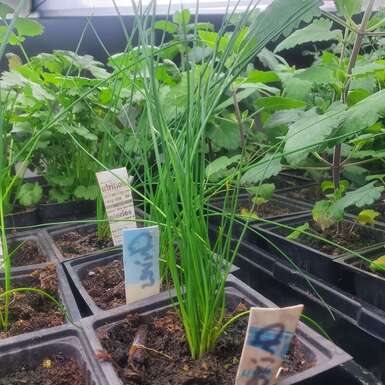
Chives started from seed.

Cilantro

​Cilantro (Coriandrum sativum), also known as coriander, is an annual herb commonly used in Mexican cuisine. We call the leaves cilantro and the seed coriander in the United States. Many people enjoy the lime-like flavor of cilantro, but some taste soap or other off-flavors instead due to changes in the OR6A2 gene, which encodes an olfactory receptor protein. I find cilantro to be probably the most challenging herb to grow. It tends to bolt quickly, particularly in full sun and hot weather. I have even tried growing varieties less prone to bolting, such as “Slow-Bolt” and “Caribe,” without much luck. However, if I let the cilantro bolt and reseed itself, I often have small amounts of usable cilantro and seed for much of the summer.

Dill

​Dill (Anethum graveolens) is an herb most well-known for seasoning pickles. I also like dill on fish. Dill is an annual that can grow up to 3 feet tall. If you allow it to go to seed, it will self-sow prolifically, and you may not need to plant dill again. The flower heads of dill are often used; you can also collect the frilly leaves and the seeds. Dill is best sown directly in place as it has a taproot that does not allow it to transplant well. Dill likes full sun, but keep the soil moist, or it can bolt prematurely. There are many sources, even reputable ones, that claim that dill and fennel will cross-pollinate, so as not to plant them near each other. This is unlikely since dill and fennel belong to different genera (Anethum vs Foeniculum). I believe this myth is perpetuated because the plants look similar. I have also planted them a few feet apart and have had no issues with them cross-pollinating. Also, cross-pollination only affects the seeds of a plant, and if you plant those seeds, it will affect the following year's plant. There is no way cross-pollination can affect the leaves or even the fruit of the currently growing plant.

Fennel

​There are two types of fennel (Foeniculum vulgare). Bulbing fennel (Florence variety) produces large bulbs at the base of the plant and is my preferred variety to grow. You can also use the leafy greens. Sweet fennel is grown for the leaves and does not produce a large bulb. Some fennels can be grown as short-lived perennials or biennials, but I grow them as an annual in my zone of 4b. I direct-seed fennel in late spring/early summer. It is possible to transplant fennel, but it forms a long taproot, and disturbing the roots can cause it to bolt prematurely. High heat and long summer days can also cause it to bolt prematurely, but I do not have a long enough growing season to delay planting. Some fennel varieties, such as “Bronze,” have a darker, copper color and are often grown for ornamental purposes.

Garlic

Garlic (Allium sativum) is divided into 2 types: hard-neck, which forms scapes and grows better in northern climates, and soft-neck, which does better in southern climates. For the hard-neck, northern varieties, which I grow, the cloves are planted in the fall and harvested the following summer. You can buy new bulbs every year to plant, or you can save some of the garlic you harvested in the summer and plant the cloves in the fall. You can plant garlic in the spring, but the bulbs get larger if you plant in the fall. You can also harvest and eat the scapes from the hard-neck varieties. My favorite way to eat them is grilled or scape pesto. There are many varieties of garlic. I like Music, which forms very large, white bulbs, but you get 4-5 large cloves per bulb. I also like Chesnok Red, which has much smaller bulbs but has more cloves per bulb. They also have purplish-red stripes on the outer skin of the bulbs. I also like both these varieties as they store well, usually long into spring. For more information on growing garlic, please check out my blog post.
Picture
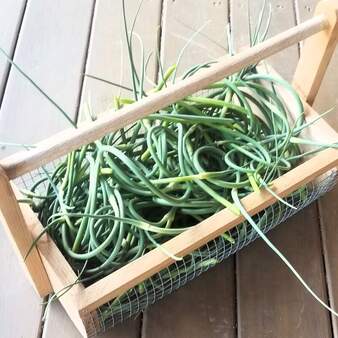
Garlic scapes in my garden hod. Garlic is one of my favorite plants to grow and scapes are one of my favorite foods.

Ginger

Ginger (Zingiber officinale) is a perennial in warm climates, but I grow ginger in fabric pots and bring them in for the winter until they die back. After the ginger dies back, I dig out the roots, pick out the best for replanting, break those roots up into plantable chunks (look for where new buds are starting to form), and let them dry for a week or two. I then re-plant the root pieces, usually in late winter/early spring. Ginger grows large, up to 4 feet tall, so I plant it in 5-7 gallon fabric pots. I like to slice and dry my ginger to later grind into ginger powder or use it for tea.

Lavender

​There are three lavender species, but common lavender or English lavender (L. angustifolia), particularly the “Munstead” variety, is the only one I have managed to overwinter in my area. Lavenders prefer full sun and very well-drained soil. Lavender will even grow in rocky, dry, unfertile soil and does not like much fertilizer.
Picture
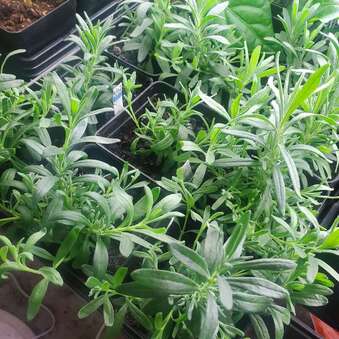
Lavender grown from seed and ready to be planted.

Lemon Balm

​Lemon balm (Melissa officinalis) is a hardy perennial (zone 4-9) in the mint family. It grows as a bush up to about 2 feet high. Like most mints, it tends to spread and will self-seed if you do not pinch off the flower heads, but it does not spread as aggressively as many other mints and is, therefore, easier to keep under control when planted in the ground. Lemon balm can be used in cooking, but I use mine for tea.

Lemongrass

​Lemongrass (Cymbopogon citratus) is a perennial in hot zones (10-11), but I grow it in a pot and bring it inside for the winter. It is used to make tea and in Asian cooking, particularly Vietnamese and Cambodian dishes. I use it most often to flavor chicken and for tea. Lemongrass is related to citronella grass (C. nardus and C. winterianus), used to make citronella oil, an insect repellent. Some also report that lemongrass planted outside will repel mosquitoes.

Lovage

​Lovage (Levisticum officinale) is a celery-like herb that can grow 6 feet tall. This is perennial in my zone 4b; although it dies back to the ground every winter, it grows back in the spring. Lovage grows in full sun to partial shade but prefers moist soil. The lovage leaves can be used like celery, in soups or stews. The flavor of lovage is too strong for my taste, so I prefer to use it in smaller amounts.

Marjoram

​Marjoram (Origanum majorana) is related to oregano (Origanum vulgare) but is less cold-hardy, so I grow it in pots, which I bring in for the winter, or in my Aerogarden, or I grow it outside in the ground as an annual. Marjoram usually has smaller leaves than oregano, and its flavor is milder. In general, I find marjoram to grow less vigorously than oregano. I like marjoram as an additive to my Italian seasoning mix.

Oregano

​Oregano (Origanum vulgare) is usually hardy to zone 4 and is a vigorous, easy-to-grow herb. It is related to marjoram (see above), but the leaves tend to be larger, and its flavor is stronger. I use oregano alone or in combination with other herbs in an Italian seasoning mix and in many tomato-based products, like spaghetti sauce, pizza sauce, and tomato soup. Oregano likes full sun and dry soil and can spread aggressively. I clip off the flowers to keep them from reseeding.

Parsley

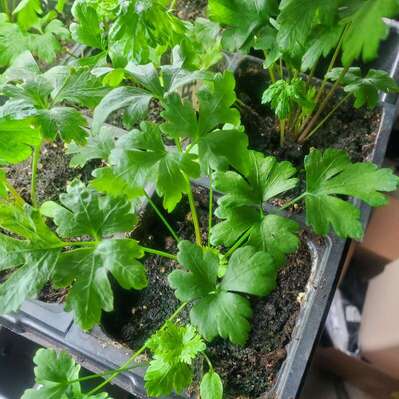
Parsley (Petroselinum crispum) is easy to grow, but starting it from seed can take up to 3 weeks to germinate. Parsley is a biennial plant and cold-hardy enough in my area to overwinter the first year and then go to seed the second year. I use the leaves the first year and then allow some to go to seed to collect the seed to plant the following spring. I also get volunteers that grow each year from seeds I missed collecting. My favorite variety to grow is Italian flat-leaf parsley, but curly-leaf (French) parsley is also popular. Hamburg parsley is grown for the edible root, similar to parsnips, but I prefer parsnips over parsley root, which has a stronger flavor. I plant my parsley in my front flower beds, which get full sun, but parsley can also handle partial shade. Parsley does not dry well as it tends to lose flavor, so I freeze mine to preserve it. I also try to have one growing during the winter in my Aerogarden.
Picture
Parsley seedlings.

Rosemary

​Rosemary (Rosmarinus officinalis) is a heat-loving plant hardy to only zone 7 or 8; therefore, I grow my rosemary in a pot and bring it inside for the winter. Rosemary can be difficult to overwinter indoors as it likes to absorb moisture from the air, not just from the roots. It also prefers dry soil. If you live where the heat is on all winter, the air can get dry in your house. Therefore, keeping a humidifier running all winter helped me to overwinter my rosemary. You can also mist your rosemary plant a couple of times a week. I also like to keep a backup plant around just in case one dies. My current rosemary has overwintered multiple seasons and is about 3 feet tall. I preserve my rosemary by dehydration, but since I bring it in for the winter, I can also use it fresh all year.

Sage

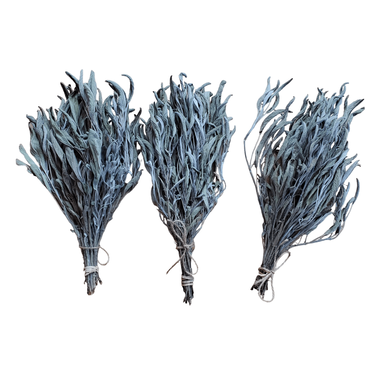
Sage (Salvia officinalis) is hardy to zone 4 and overwinters well for me. The plant can get large, only 2 feet tall, but it can have a big spread. It has shrub-like growth, and I occasionally prune it back to keep it manageable. It tends to flower, which the bees love, but I often cut them back before they produce seeds. Cutting off the seed heads also makes the bush neater in appearance. I tend to preserve my sage by dehydrating. Many other types of sage are popular, such as pineapple sage (not as cold hardy), golden sage, and purple sage.
Picture
Bundles of sage after air drying upside down.

Savory

​There are two types of savory, summer (Satureja hortensis) and winter (Satureja montana) savory. Summer savory is an annual that dries well, and I often include it in my Italian seasoning blend. It is also traditionally paired with beans. Winter savory is hardy to zone 6, so I grow it as an annual or in pots. It has a stronger flavor and fragrance than summer savory but can be used similarly. Both types of savory prefer full sun and well-drained soil.

Thyme

​Common thyme (Thymus vulgaris) is hardy to zone 4-5, and I have successfully overwintered it in zone 4b during mild winters. Thyme is a low-growing herb commonly used as ground cover. Thyme prefers full sun with well-drained soil and can be grown from seed or by cutting off clumps that have spread from the main plant and rooted. Thyme is one of the main ingredients in my Italian Seasoning mix. Other varieties of thyme are also popular, including lemon and lime thyme, which I like on chicken or fish, but I find these varieties harder to find, both as seeds and in greenhouses as starts.

Turmeric

​Turmeric grows best in warmer climates where it is a perennial, but it can be grown in pots in colder areas. Turmeric can get very large and does best in a 10-gallon pot. Turmeric can be grown like ginger, except that turmeric gets bigger. I usually plant the rhizomes (roots) in 6-inch pots in late winter/early spring. Once they begin growing (which can take several months), I transplant them into 10-gallon fabric pots and place them outside once it has warmed up (June for me). I bring the pots into my garage in the fall, and when the plants die back (usually around December-January), I dig up the roots. I break apart the roots into large pieces (you can generally see where new shoots want to start) and save the best ones for re-planting. I let the roots dry out for a week and then re-plant. The rhizomes of turmeric are used for culinary purposes, most often incorporated into curries. Turmeric can be used fresh, but I clean, peel, slice, and dehydrate most of my roots for long-term storage.

References

  1. Jessica Houdret. Practical Herb Garden. A comprehensive A-Z directory and gardener’s guide to growing herbs successfully. 2003. Hermes House. London.
  2. Basil. Johnny’s Selected Seeds. https://www.johnnyseeds.com/herbs/basil/?utm_source=google&utm_medium=cpc&utm_campaign=&utm_keyword=basil%20varieties&gad_source=1&gclid=CjwKCAjw8diwBhAbEiwA7i_sJZWggapZWtJaw1tdmsB9V1b1efFD9fSC-sf11EvVTeAhIIrUfFHakxoCOsMQAvD_BwE
  3. Bugeja, Shane. Catmints and catnip: Which is “purrfect” for your garden? April, 8, 2021. https://extension.umn.edu/yard-and-garden-news/catmints-and-catnip-which-purrfect-your-garden

Share

0 Comments

4/1/2024

Goldenrod

0 Comments

Read Now
 
Picture
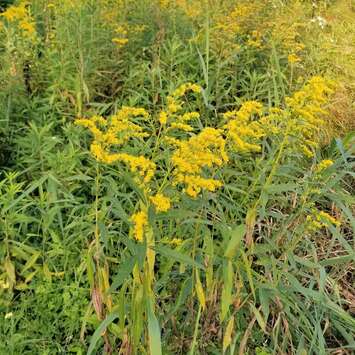
Goldenrod on our property in central Wisconsin, likely Canada Goldenrod.

Goldenrod

​Goldenrod belongs to the genus Solidago, but some goldenrods have recently been classified into the Oligoneuron or Euthamia genus as well due to new relationships discovered via DNA sequencing. Goldenrods consist of over 100 flowering plants in the Asteraceae family, many of which are native to the United States. The various species can be difficult to distinguish as many look similar to each other, and most have yellow flowers. I have at least two species on my property, I believe they are Canada Goldenrod (S. canadensis), which is very common, but several other common species look very similar. I also have Old Field Goldenrod (S. nemoralis), which is one of the shortest varieties and therefore easier to identify.

Goldenrod and Allergies

​Many people blame the goldenrods for their allergies in late summer/early fall. However, the pollen of goldenrod does not become airborne because it is too large to float through the air. It is also sticky, so it clings to insect pollinators. Instead, ragweed causes most fall allergies because its pollen is airborne, and it flowers at the same time as goldenrod. However, its flowers are much less showy than those of goldenrod, making it less noticeable. Goldenrods are crucial for many insects, including pollinators, and make a valuable addition to any native garden. They tend to flower later in the season, from late summer to early fall, so they are a great food for the bees just before winter, when many other plants have finished flowering. Goldenrods also tend to like dry soils, although several grow well in wet environments, and most are very low-maintenance.

Goldenrod Galls

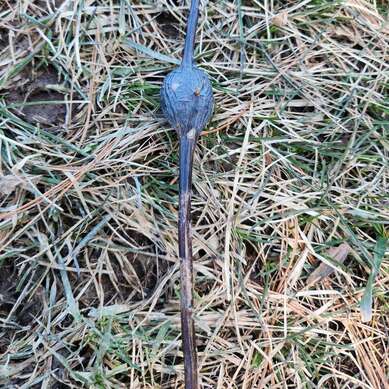
Goldenrod galls are ball-shaped swellings found on goldenrod stems, including Canada Goldenrod (S. canadensis), Late Goldenrod (S. altissima), and Giant/Late Goldenrod (S. gigantea). These galls are caused by the goldenrod gall fly (Eurosta solidagnis). This fly completes its lifecycle only on goldenrods. A fly lays its eggs in the goldenrod stem in the spring. Once the eggs hatch, the larvae burrow inside and feed on the stem. The larvae’s saliva contains a chemical that mimics a natural plant hormone. This chemical hormone mimic makes the stem grow excessively around the larvae, forming the gall. The galls do not harm the goldenrod, and you generally see the flowers blooming around the gall. Once the plant dies back in the fall, the gall turns hard and brow,n and the larva chews a hole to the surface of the gall, leaving a thin layer covering the entrance. The larva survives through winter, pupates in early spring inside the gall, turning into an adult fly. The fly then emerges in mid-spring, pushing through the membrane left behind to cover the entrance. 
Picture
A goldenrod gall after the plant has died back over winter.
​The goldenrod gall larvae are not necessarily safe inside the gall. There are two different species of wasps (Eurytoma obtusiventris and Eurytoma gigantea) that eat the larvae inside the gall, as well as a species of beetle (Mordellistena unicolor) that eats the tissue inside the gall and occasionally eats the goldenrod gall larvae as well. The larvae in the galls also serve as a food source for birds, including the downy woodpeckers and black-capped chickadees. Other goldenrods can also form galls caused by different insects, including the goldenrod bunch gall midge (Rhopalomyia solidaginis) and the goldenrod gall moth (Gnorimoschema gallesolidaginis). 

Goldenrods of the Midwest

According to BONAP, the following goldenrod species are native to Wisconsin, and for many of them, much of the Midwest and beyond as well.

Euthamia Genus

​Euthamia graminfolia – Grass-Leaved Goldenrod – This goldenrod is not considered a true goldenrod, which is why it has been moved to the Euthamia genus. This goldenrod has narrow leaves, giving it its name. It prefers sunny locations with moist soil, but can be aggressive in these locations as it spreads via rhizomes. Many insects are attracted to this plant, including the Goldenrod Soldier Beetle (Chauliognathus pennsylvanicus) and the Black Blister Beetle (Epicauta pensylvanica). Birds such as Eastern Goldfinches and Swamp Sparrows also eat the seeds. Generally 2-4 feet in height, and can be confused with Great Plains Goldenrod.
​
Euthamia gymnospermoides – Great Plains Goldenrod – This goldenrod prefers full sun but can adapt to moist or dry soils. It grows up to 3 feet tall and can be aggressive as it has both fibrous roots and rhizomes. This goldenrod looks similar to Grass-Leaved Goldenrod.

Oligoneuron Genus

Oligoneuron album – Upland White Goldenrod or Prairie Goldenrod– This goldenrod is unusual for its white flowers and short height (12-24 inches tall). It prefers full sun with drier soil, even sandy, rocky soil. This goldenrod has been renamed multiple times due to genetic sequencing and is currently placed in the Oligoneuron genus, but was formerly called Solidago ptarmicoides.

Oligoneuron ohioense – Ohio Goldenrod – This goldenrod likes full sun, but with wet soil, it even does well in clay soils that are not particularly well-drained. This goldenrod is threatened in some areas due to its requirement for wet, marshy soils. So this is a great one to plant if you have the right growing conditions and you are helping sustain its population.

Oligoneuron riddellii – Riddell’s Goldenrod – This goldenrod used to be in the Solidago genus but was recharacterized as Oligoneuron. It needs full sun but preferably wet soil. Many insects enjoy this plan, which also brings in insectivorous birds looking for food. Birds, such as sparrows and goldfinches, also feed on the seeds. Many bees are attracted to the flower, including bumble bees, carpenter bees, Andrenid bees, yellow-faced bees, and digger bees. It grows up to 40 inches tall.

​Oligoneuron rigidum (formerly S. rigida) – Stiff Goldenrod – Several Solidago species, including Stiff Goldenrod, have recently been moved to the Oligoneuron genus. This goldenrod has larger flowers than most other goldenrods. It can self-seed, so if it is planted in an area where you do not want seedlings popping up everywhere, then the seed heads should be clipped off. This flower likes sunny conditions but can tolerate dry to moist soil and can grow up to 4-5 feet tall. This goldenrod attracts many insects, including butterflies and bees, as well as birds.
Picture
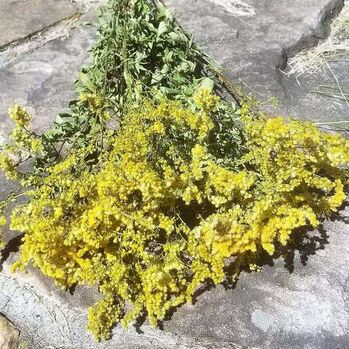
Goldenrods dry well and make beautiful dried flower bouquets.

Solidago Species

Solidago altissima – Tall Goldenrod – This goldenrod prefers full sun and dry to moist soils. Very similar to Canada Goldenrod and Late Goldenrod, and all three can be difficult to distinguish. This goldenrod also hosts many different gall-forming insects.

Solidago caesia – Blue-Stemmed Goldenrod – This goldenrod is not aggressive but prefers shade and moist soil. It is named for its blue or purple stem.
​
Solidago canadensis – Canada Goldenrod – Similar to Tall Goldenrod and Late Goldenrod. This plant can get up to 5 feet tall and prefers full sun and dry to moist soil. This can be an aggressive spreader and is considered invasive in many European countries where it was introduced from North America. This is not a good choice for small flowerbeds or areas where you want to keep goldenrod from spreading, but I love it on our property, where we have large fields of it (unfortunately mixed in with several invasive species such as tansy) and no need to keep it contained. This species also hosts many gall-forming insects, and we have found many galls on the goldenrod on our property.

Solidago flexicaulis – Zigzag Goldenrod – This goldenrod looks different, particularly the leaves, which are larger than many other goldenrods, and the stem changes direction at every leaf node, creating a zigzag effect. It can be aggressive, so it should not be planted in areas where you want to contain the growth of your plants. This goldenrod also prefers more shady conditions with more moist soil than many other goldenrods. It can grow up to 3 feet tall. This goldenrod can also play host to insects that induce galls in the plant.

Solidago gigantea – Late Goldenrod or Giant Goldenrod – This goldenrod prefers moist soil, can thrive in full sun to partial shade, and can reach heights of six feet. This goldenrod can easily be confused with Tall Goldenrod and Canada Goldenrod.

Solidago hispida – Hairy Goldenrod – This goldenrod likes partial shade to full sun. It does well in dry, sandy, or gravely soil where it grows up to 3 feet tall. The leaves have tiny hairs on them, giving this goldenrod its name.

Solidago juncea – Early Goldenrod – This goldenrod is one of the earliest to bloom, as early as July in some places, hence the name, Early Goldenrod. It is medium-sized sized from 2-4 feet tall, and grows in moist to dry soils and likes sunny to partially sunny conditions. This goldenrod does spread by rhizomes, so it may need to be thinned out occasionally and requires some effort if you wish to keep it contained.

Solidago lepida – Western Canada Goldenrod – This goldenrod is common across Canada and the western United States. Wisconsin is the most eastern occurring location in the United States, but it is not found to the south, except further west. This goldenrod can reach up to 5 feet.

Solidago missouriensis – Missouri Goldenrod – Very similar to Early Goldenrod, but does not spread by rhizomes, so less aggressive. It likes full sun and drier soils. It can grow up to 3 feet. One of the earlier blooming goldenrods, which can bloom as early as mid-July.

Solidago mollis – Velvety Goldenrod – This goldenrod prefers full sun with dry to moist soils. It is rare in Minnesota and Wisconsin, and was listed as a Special Concern species in 1984 by Minnesota.

Solidago nemoralis – Old Field Goldenrod or Gray Goldenrod – This is one of the shorter goldenrods, no more than 2 feet high. It will grow in poor, dry soils where other plants have difficulty getting established. Like most Goldenrods, S. nemoralis will attract butterflies and various pollinators.
Solidago patula – Round-Leaved Goldenrod – This Goldenrod prefers shade and moist soils and can reach 3 feet in height.

Solidago rugosa – Wrinkleleaf Goldenrod – This goldenrod is found throughout much of the eastern United States and Canada, as far west as Wisconsin in the North and Texas in the South. This goldenrod looks similar to Bog Goldenrod.

Solidago sciaphila – Cliff Goldenrod – A rare goldenrod listed as a Special Concern species by Minnesota in 1984. It is shorter in size than most others, no more than 30 inches high. This goldenrod likes dry soil with mostly sunny conditions. Grows well on rocky outcroppings, giving it its name.

Solidago speciosa – Showy Goldenrod – This goldenrod is not an aggressive grower like others in the Solidago genus because it does not spread via rhizomes, so it is a good choice if you have a smaller flower bed that you do not want to be overrun with a single species. This flower does well in sunny conditions with drier soil and can grow up to 4-5 feet high. This goldenrod attracts many insects, including many types of bees such as sweat bees, bumble bees, carpenter bees, Andrenid bees, and more.

Solidago uliginosa – Bog Goldenrod – This goldenrod forms tall, up to 4-5 foot spikes, which look very different from the flowers of most other goldenrods. This goldenrod prefers shade with moist soils, hence the common name of Bog Goldenrod.

Solidago ulmifolia – Elm-Leaved Goldenrod – This goldenrod is native to much of the eastern United States to the Midwest. They prefer moist soils in shade or partial shade and do self-seed prolifically. They also have rhizomes, so spreading by both seed and root is likely. The leaves are similar to elm trees, giving this goldenrod its name. This goldenrod grows to 2-4 feet tall.

References

  1. Prairie Moon Nursery. https://www.prairiemoon.com/
  2. Minnesota Wildflowers. A Field Guide to the Flora of Minnesota. https://www.minnesotawildflowers.info/
  3. Michigan State University. MSU Extension. Native Plants and Ecosystem Services. https://www.canr.msu.edu/nativeplants/
  4. Grow Native. Missouri Prairie Foundation. https://grownative.org/
  5. Mahr, Susan. University of Wisconsin-Madison. Wisconsin Horticulture. Division of Extension. https://hort.extension.wisc.edu/articles/goldenrod-gall-fly-eurosta-solidagnis/
  6. Chris Helzer. What’s Really Going On Inside Those Galls?? (It’s Not Just Fly Larvae). March 8, 2023. https://prairieecologist.com/2023/03/08/whats-really-going-on-inside-those-galls-its-not-just-fly-larvae/

Share

0 Comments
Details

    Author

    In 2016, my family and I  moved from the New York City area to small town Wisconsin. Our move, this website and blog (and our previous Etsy store) is the result of our desire over the past several years to simplify our lives, increase our quality of life, reconnect with nature, and enjoy a more self-sufficient life. I grew up as a country kid in central Pennsylvania working on my grandfather's fruit farm and as a corn "de-tassler" at a local seed farm. My background is in biology where my love of nature originated. I am a former research scientist and professor and have now transitioned to a part-time stay-at-home mom, self-employed tutor, and small business owner. Thank you for taking the time to check out my site.
    ​Marisa

    Archives

    September 2025
    June 2025
    May 2025
    April 2025
    March 2025
    February 2025
    January 2025
    December 2024
    November 2024
    October 2024
    September 2024
    August 2024
    July 2024
    June 2024
    May 2024
    April 2024
    March 2024
    February 2024
    January 2024
    December 2023
    November 2023
    March 2023
    January 2023
    May 2019
    March 2019
    November 2018
    October 2017
    September 2017
    August 2017
    February 2017
    January 2017

    Categories

    All
    3-Pronged Cultivator
    Aerogarden
    Antique
    Apothecary Glasses
    Apple Cider
    Apple Varieties
    Apricots
    Aronia Berries
    Artichokes
    Atlas Gloves
    ATV
    Bacillus Thuringiensis
    Bare Root Trees
    Beer Glasses
    Berries
    Black-Eyed Susan
    Bleached Pinecones
    Bleached Pinecone Wreaths
    Blossom End Rot In Tomatoes
    Books
    Bt
    Butterflies
    Cabbage
    Canning
    Celery
    Chamomile
    Chard
    Chemistry Glasses
    Chickens
    Chicken Tractor
    Cider
    Cold Crops
    Cold Frame
    Collards
    Compost
    Concord
    Coneflowers
    Cornish Cross
    Daisies
    Deer
    Deer-fencing
    Dehydrating Food
    Dried Flowers
    Drip Irrigation
    Dual Purpose Chickens
    Ducks
    EBay
    Echinacea
    Edelweiss
    Eggs
    Elderberries
    Elderberry Wine
    Environment
    Extend The Growing Season
    Fall Crops
    Fall Gardening
    Farm Life
    Favorite Gardening Tools
    Fermentation
    Fermenting Wine
    Flower Gardening
    Food Preservation
    Frost Dates
    Fruit Trees
    Fruit Wine
    Garden Hod
    Garden Huckleberries
    Gardening
    Garden Pests
    Garden Seat
    Garlic
    Garlic Scapes
    GMO Seeds
    Goldenrod
    Gourds
    Grapes
    Greenhouse
    Growing Herbs
    Health
    Heirloom Seeds
    Herbs
    Hill Crops
    Home Decor
    Homemade Jam
    Hori Hori Soil Knife
    Hot Sauce
    How To Start Seeds
    Hybrid Or F1 Seeds
    Hydroponics
    Insecticides
    Itasca
    Japanese Weeding Sickle
    Jerusalem Artichokes
    Kale
    Karner Blue Butterfly
    Lactic Acid Fermentation
    Leatherman Multi-Tool
    Lettuce
    Lupine
    Maple Syrup
    Marquette
    Meat Birds
    Milkweed
    Monarchs
    Mulch
    Native Plants
    Nightshades
    No-Mow May
    Onions
    Open-pollinated-seeds
    Open-pollinated-seeds
    Orchard
    Organic Gardening
    Organic Pest Control
    Overwintering Fall Crops
    Parsnips
    Pear Varieties
    Peas
    Peppers
    Pepper Varieties
    Pest Control
    Pickles
    Pinecone Wreath
    Pinecone Wreaths
    Plums
    Poultry
    Pruners
    Pumpkins
    Purple Coneflower
    Raised Beds
    Ranger Chickens
    Rudbeckia Flowers
    Sauerkraut
    Save Money
    Seed Companies
    Seed Saving
    Seed Tapes
    Self-Sufficiency
    Slow-Mow Summer
    Soaker Hoses
    Square-Foot Gardening
    Squash And Pumpkin Species
    Storage Onions For Northern Climates
    Summer Squash
    Sun Hat
    Sustainability
    Tansy
    Ticks
    Tomatoes
    Tomato Varieties
    Trailer
    Turkeys
    Turnips
    Two Ponds Farm
    Vegetable Gardening
    Vintage
    Wine
    Wine Grapes
    Wine Grapes For Northern Climates
    Winter Squash
    Wood-Fired Evaporators
    Wreaths
    Yarrow
    Zucchini

    RSS Feed

© 2024 Two Ponds Farm All Rights Reserved

  • Home
  • About
  • Blog
  • Contact
  • Privacy Policy
  • Garden Pictures
  • Chicken and Duck Pictures
  • Native Plant Pictures
  • Game Camera Pictures