Meat Birds: A Comparison of Cornish Cross, Ranger, and Dual- Purpose ChickensThere are three main types of chickens that are commonly raised for meat production. The Cornish cross are the most common meat bird in the United States. The Ranger-type chicken is becoming more popular with homesteads, backyard flocks, smaller commercial farms, and hobby farms, as many of their traits are in between the Cornish cross and the dual-purpose bird. The last type is the dual-purpose chicken (good for both meat and eggs), which is also very popular with homesteads, backyard flocks, and hobby farms, for the obvious reason that you can get both eggs and meat from the same birds. Cornish CrossThere are many misconceptions regarding the Cornish cross chicken. They are simply a hybrid bird (the parents are two different strains of chickens), that have been selected for by breeding programs since approximately 1916. They are NOT genetically modified. Cornish cross chickens generally have male Cornish and female white Plymouth Rock parents, although this can vary from hatchery to hatchery. If the female parent is a Plymouth Rock strain, these chickens are also sometimes called Cornish Rock chickens. Some hatcheries may use another strain in place of the Plymouth Rock female. The Cornish game hen, or Rock Cornish game hen that you buy in the grocery store is the exact same type of chicken, just processed much younger so it weighs less than 2 pounds. Cornish Cross: The GoodCornish cross chickens are a great choice for people raising meat birds for the first time. I will discuss each of these positive points in further detail below.
Cornish cross chickens are the fastest growing chicken, they are generally processed by 8 weeks at the latest, although commercial farms can get them to processing weight even faster (this is not a positive in my opinion). We usually process our Cornish cross chickens at 7 weeks because at this point they start to look uncomfortable and are much less active. In general, Cornish cross chickens have a feed conversion ratio of approximately 2. This means that for every 2 pounds of food eaten, they gain 1 pound of weight, which is an incredible ratio for meat production. Commercial farms can get this number even lower. We have found our Cornish cross chickens to be curious and friendly. They follow our daughter around and are not scared to come close and check things out. We have however, mostly raised female Cornish cross chickens so this attitude could differ with males, although I think this is unlikely given how young they are when processed (the males do not have time to become sexually mature and get aggressive). The Cornish were bred not just for their fast growth rate and large breasts but also to have fewer feathers and “hair” than other chickens. Some of our Cornish still have a few bald patches even at 7 weeks. This makes them much easier to pluck than many other breeds of chickens. Cornish Cross: The Bad Cornish cross chickens do have a bad reputation for various reasons much of which is either untrue, undeserved, or depends on how they are raised. I will discuss each “negative” point in more detail below.
As I mentioned earlier, Cornish cross chickens are a hybrid-type chicken, they are not genetically modified. To my knowledge, no animal for meat consumption is currently approved and on the market that has been genetically modified. Additionally, in my personal and scientific opinion (I have my PhD in Cellular and Molecular Biology) not all genetic modification is bad and each situation must be assessed on a case-by-case basis. Cornish cross chickens can have leg problems due to their extremely fast weight gain. However, leg issues can be dramatically decreased by removing their food for 8-12 hours at night starting at 1-2 weeks of age. We had one chicken in our 2 years of raising them (out of ~30 birds) that lost the ability to walk, however this occurred at a young age and was unlikely due to the size of the bird. We also pasture our birds, which means we let them free range during the day, this helps keep them more active than if they are confined in close quarters. Another strategy is to place their food and water out in the pasture, not in the chicken tractor or coop so as to encourage movement. Also place the food separate from the water so they must move between the two to eat and drink (just not too far!). Last, as mentioned above we generally raise female chickens so they do not get as large as male birds and this may reduce the chance of leg problems (although I have never raised straight run or all male to compare, so this is just a guess). 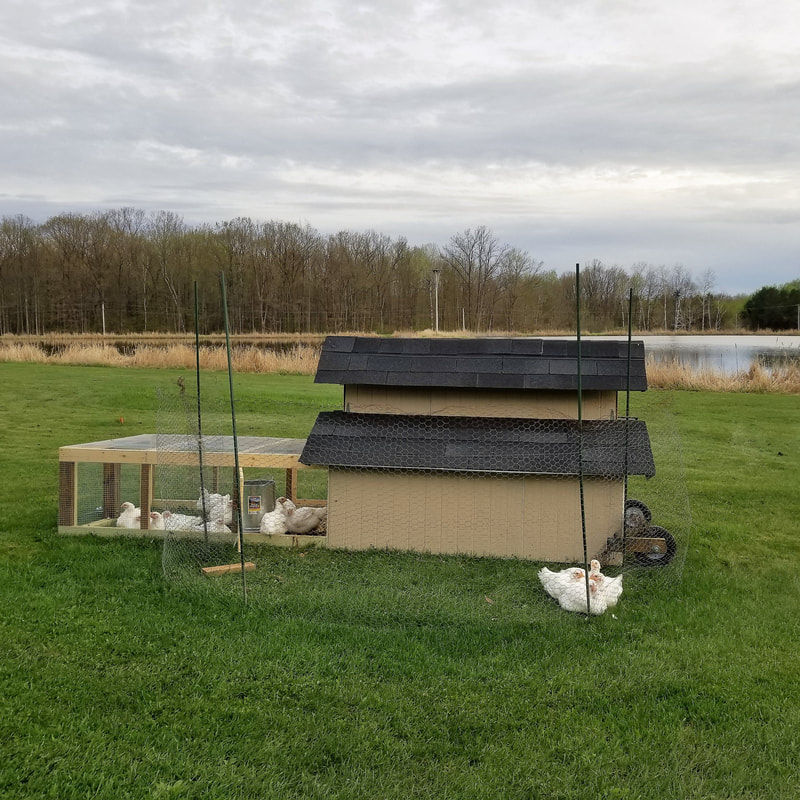 Although Cornish cross chickens will never forage like heritage birds they do enjoy hanging out on grass. Cornish cross chickens also have a reputation for simply falling over dead. This can be true. Again, we had one bird in our 2 years raising them (out of ~30 birds) that we found dead for no apparent reason. This was likely due to a heart problem. These birds can grow so quickly that their organs, in particular their hearts, cannot keep up with their growth rate and they can have a heart attack and die. Again, this problem can be greatly reduced by both restricting their feed and pasturing them to slow their growth. One last note is that because these are hybrid birds, each hatchery has its own unique strain of Cornish cross that they have developed. So, if you have bad luck with your birds (leg problems or falling over dead), even with proper management, you can try again with another hatchery to see if their mix of Cornish cross chickens is better. Another myth that is common with Cornish cross and chickens in general is that they are given hormones to make them grow faster. This is not true, and no chicken is allowed to be given hormones in the United States. So, if you see chicken in the grocery store labeled hormone-free, this is just a marketing technique as all chicken sold in the US is hormone free (except for the natural hormones that the chickens make themselves). The Cornish have already been selected to grow so quickly that even if growth hormones were allowed to be given it would not make sense from an economical perspective. Many people who are in favor of pasture-raised chicken are decidedly against Cornish cross chickens. The reason for this is that many people believe that Cornish cross will never free range. This can be true, and again depends on how they are raised. If you raise them in a coop with the food inside, even with an open door to a pasture, they will likely rarely leave the coop. But if you get them out on pasture as early as possible, preferably in a chicken tractor that can be moved daily, and place their food on the grass, it will encourage them to forage and scratch around in the grass. We try to get our chickens out on pasture by 3 weeks of age but depending on weather that sometimes gets delayed to 4 weeks. You can, however, give them weeds, grass, lettuce, greens, bugs etc. from an early age so that they know what to do once they are out on pasture. The truth is Cornish cross will never free range like a “normal” chicken, but with proper housing and management they will forage some and not just sit in front of their feeder eating all day. Ranger ChickensRanger chickens, like the Cornish cross, are a hybrid chicken that have been developed as a fast-growing meat bird. However, Rangers are more of a heritage-type bird, that grow more slowly than the Cornish cross, they do not develop the large breasts like the Cornish, and also free range more extensively than the Cornish. Again, like the Cornish cross, each hatchery has developed its own strain of the Ranger bird so you may see them listed as Red Rangers, Freedom Rangers, Rainbow Rangers, etc. These birds generally are ready for processing at 9-14 weeks. Rangers: The GoodRangers do have several advantages over both Cornish cross chickens and dual-purpose birds.
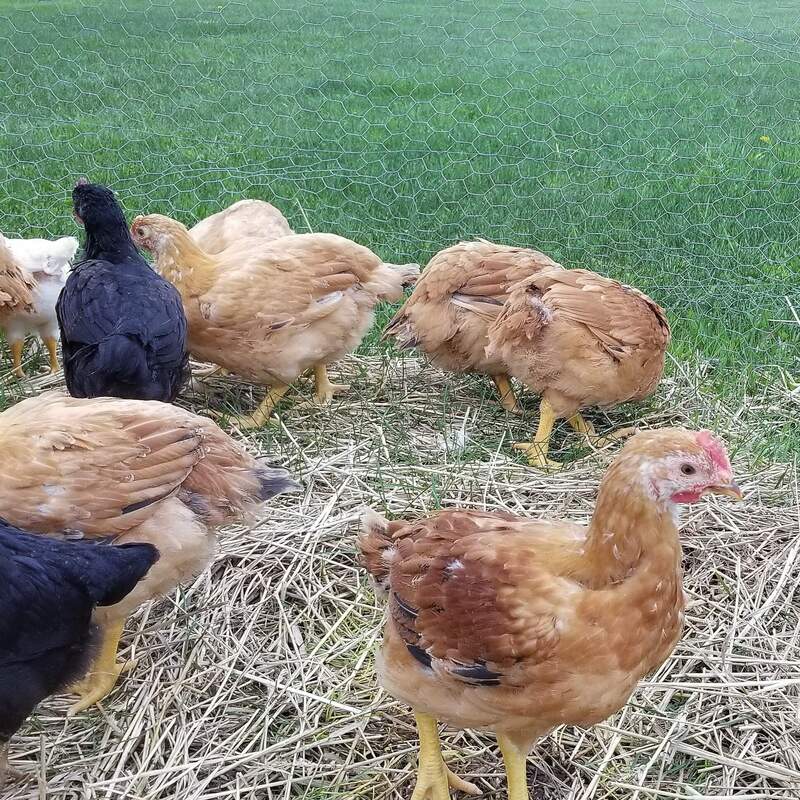
Although Ranger chickens are not ready for processing in less than 8 weeks, they still grow extremely quickly. We processed our Rangers at 10 weeks and averaged 4.3 lbs/bird compared to our Cornish cross which averaged 4.5 lbs at 7 weeks. Dual purpose by comparison, generally are recommended for processing at 20-22 weeks. We found the Ranger birds to still be relatively friendly and curious. These chickens would follow my daughter around even more than the Cornish cross. The Rangers were only available straight run so we did have a couple males, which showed some signs of aggression, but nothing like our older dual-purpose roosters which actively stalked us in order to attack. The Rangers did free range more than the Cornish, although I am not super impressed by their foraging ability. They still tended to stay close to their chicken tractor and by 10 weeks they were more apt to stay in one place, near their food and water. By comparison, our dual-purpose chickens free range significantly further than the Rangers ever did. There also appears to be a great deal of variation on the behavior of the Ranger chicken from one hatchery to another, not surprising as each strain of Ranger varies from hatchery to hatchery. We have tried 2 different hatcheries for our Ranger birds and prefer one over the other. Rangers from one hatchery were extremely active, to the point where they did not gain weight very quickly. By the time we harvested them we had several birds still in the 3 pound range, even after delaying the processing date by several weeks. Rangers: The BadThere are a few disadvantages to choosing Ranger chickens over Cornish cross.
The Rangers are more expensive to raise than the Cornish cross. First, they cost more to buy from the hatchery, about twice what Cornish cross costs. Although they free range more than the Cornish which may reduce their feed consumption, you need to keep them around at least 2-4 weeks longer than the Cornish which likely negates any feed savings. 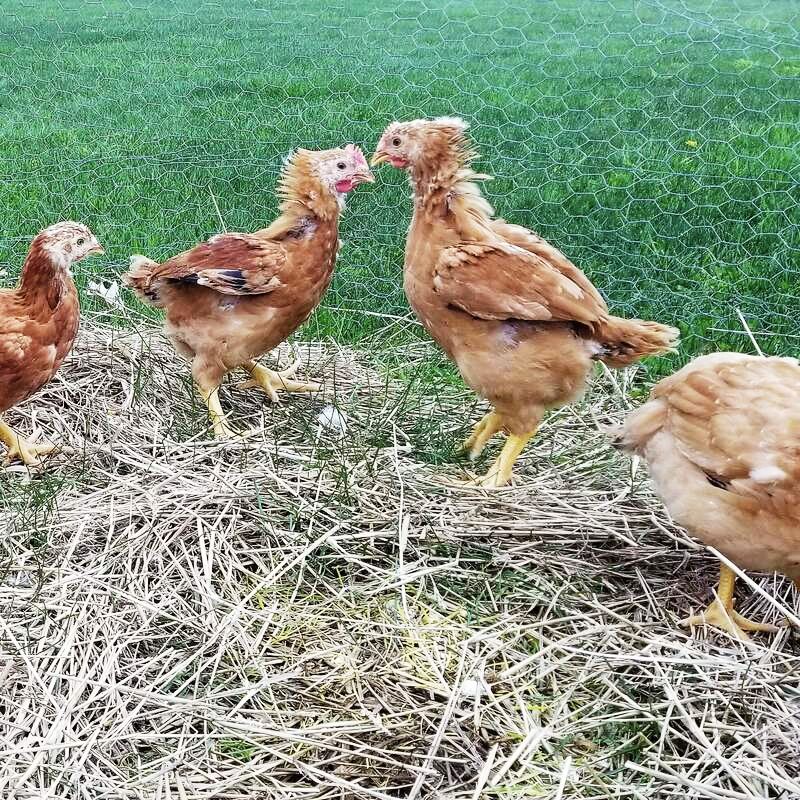 Our Ranger chickens are more aggressive than our Cornish cross chickens. We found the male Rangers we raised to be more aggressive than the couple Cornish cross males we raised. These are small numbers so may not be significant, but the Rangers were much harder in general to keep under control on processing day compared to the more docile Cornish cross. The Rangers supposedly have more “hair” and are harder to pluck clean than the Cornish cross. We did not find this to be true. However, we used a Yardbird plucking machine (worth every penny if you plan on processing large numbers of birds!) so this may not hold true if you are hand plucking. Rangers: The Good or Bad There are some attributes to the Ranger chicken that can be perceived as good or bad depending on personal preference.
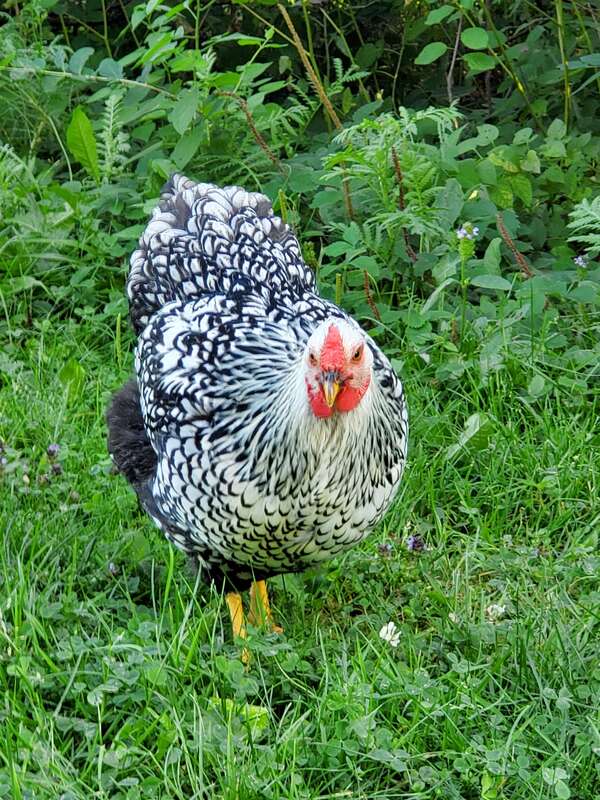
As far as the meat and taste of the birds this is mostly personal preference. The rangers have much smaller breasts than the Cornish cross. So, if you are a fan of white meat on a bird then the Cornish cross would be a better choice. The Rangers have more dark meat, although you do get a fair amount of white breast meat on these birds, but it is probably half what you get on a Cornish cross. Last, we found the main taste difference to just be the amount of grease present in the Rangers. Even when processing we would find large patches of yellow fat in their abdominal cavity. When cooking a Ranger versus a Cornish cross side-by-side the Ranger produced noticeably more drippings than the Cornish cross. We did not find that the meat of the Ranger to be more tough or gamey, even though they are the more active bid. The Ranger may have slightly more flavor, but this was not significant enough to sway us one way or the other. One last point on the flavor and moistness of these birds, we have found that the best way to cook whole chickens is to spatchcock them in which you cut out the backbone and lay them flat. This allows them to cook much more quickly, and they are delicious, particularly when grilled, although they can be cooked in the oven as well. Seriously, look up spatchcocking and try it, you will not regret it! Dual-Purpose ChickensThese chickens are the classic heritage-type chickens that your grandparents or great-grandparents may have raised if they had a farm or a backyard flock. These have now become very popular on small homesteads, hobby farms and in backyard flocks. These are the most versatile birds but also the most expensive to raise if you are only interested in meat. These birds are great if you want both eggs and meat but only want to raise one type of bird or if you want a self-sustaining population. Both the Cornish and Rangers are hybrid birds and so it is not recommended that you try to breed them yourself. However, many people raise and breed dual-purpose birds. A broody female can hatch a new batch every spring or you can collect the eggs and use an incubator. Any males that hatch can be used for meat (or as a replacement rooster) and the females can be used for either eggs or meat. This method does require that you keep a rooster around, so the eggs are fertilized, which may not be allowed depending on where you live. This last summer we purchased an incubator and hatched 8 new chicks (out of 12 eggs) that will be additional layers this spring. We will also keep one or two roosters as replacements for our overly aggressive rooster that had to be culled in the fall. Dual-Purpose: The GoodThere are several advantages to raising dual-purpose chickens.
Dual-Purpose: The BadThere are a few disadvantages to raising dual-purpose meat birds.
Dual-purpose birds are the most expensive type of chicken to raise for meat as you need to keep them around for approximately 20 weeks to reach a decent weight. We had a couple dual-purpose roosters that we processed at 18 weeks, and both were in the 4-5 lb range. But, one bird only made it to 3 lbs at 18 weeks. We processed our birds early as one became aggressive and would attack our ducks. The other downside to dual-purpose chickens is that if allowed to free-range they ravage flower beds and scratch out the woood mulch into the grass. They also ate my vegetable seedlings that I kept on my porch to be hardened off before planting in the garden. Also, chicken poop on the porch or in your garage (yes, they have been known to wander in our garage if the door is kept open) is not ideal! Dual-Purpose: The Good or Bad Dual-purpose chickens, like Rangers also have some good or bad characteristics depending on personal preference.
These birds have very little breast meat, and so are similar to the Rangers. If you prefer white meat, these are not a good choice. They do have significantly more dark meat and at 18 weeks we did not find them tough at all, even though they ranged extensively. If you butcher your old dual-purpose laying hens or allow the roosters to get too old, you may find they are tough and better suited to the stew pot or pressure cooker (although we tried pressure cooking an older rooster and still found the meat tough and difficult to eat). I found that I liked the dual—purpose chickens the best as far as flavor and they were significantly less greasy than the Rangers. SummaryWhich type of bird you choose is mostly a matter of personal preference. We enjoyed all three types of birds and I think we will likely raise all of them in the future. If you are short on time, money, or space then the Cornish are the best choice. If you prefer white meat, then Cornish are also the better choice. If, however, you prefer dark meat and want a bird that is a little more like a dual-purpose chicken, then the Rangers are the way to go due to their shorter time to maturity. In my opinion if you raise both Cornish and Rangers on pasture, many of their differences are minimized. I also strongly believe that meat birds (and egg layers too!) should be raised on pasture and should not be kept confined indoors for the entirety of their life. Lastly, if you are interested in both eggs and meat then the dual-purpose chickens are a great choice, particularly if you do not have the space to raise more than one type of bird. I also highly recommend chicken tractors as a great way to raise any type of chicken! We usually put-up temporary fencing to allow the meat birds to forage outside of the chicken tractor during the day, but if you are willing to move the tractor every day they can be left inside to forage, which also keeps them safe from predators.
0 Comments
|
AuthorIn 2016, my family and I moved from the New York City area to small town Wisconsin. Our move, this website and blog (and our previous Etsy store) is the result of our desire over the past several years to simplify our lives, increase our quality of life, reconnect with nature, and enjoy a more self-sufficient life. I grew up as a country kid in central Pennsylvania working on my grandfather's fruit farm and as a corn "de-tassler" at a local seed farm. My background is in biology where my love of nature originated. I am a former research scientist and professor and have now transitioned to a part-time stay-at-home mom, self-employed tutor, and small business owner. Thank you for taking the time to check out my site. Archives
July 2024
Categories
All
|




 RSS Feed